
MOIP Issued Revised “Examination Guidelines for Artificial Intelligence (AI) Inventions”
According to the Ministry of Intellectual Property (MOIP)’s Examination Guidelines for Artificial Intelligence (AI) Inventions, the inventive step of AI-related inventions is generally assessed based on whether one of ordinary skill in the art could have readily derived the invention from the prior art. In principle, inventive step is unlikely to be acknowledged where an invention merely applies well-known AI technology or simply systemizes tasks or business methods previously performed by humans using established AI techniques. By contrast, inventive step may be acknowledged where specific technical features, such as data preprocessing, machine learning methods, or trained models, are clearly defined, and produce a remarkable technical effect that would not have been predicted from the prior art.
Read More
Key Changes in KR Patent Examination in 2026
[MOIP Strengthens Examination Capacity and Reduces Pendency] The Ministry of Intellectual Property (MOIP) announced that it will recruit 34 new patent examiners, primarily in advanced technology fields such as artificial intelligence, the Internet of Things (IoT), and computing. Following the increase of 165 examiners over the past three years in areas such as semiconductors, secondary batteries, and biotechnology, the MOIP plans to continue expanding its examiner workforce to improve both the quality and speed of patent examination in Korea.
Read More
Scleral Laser Microporation with Precisely Controlled Individual Pores acknowledged to have an Inventive Step by the Intellectual Property High Court
Lee International recently secured a favorable ruling from the Intellectual Property High Court (IPHC) (Case No. 2024 Heo 14711) in an appeal of a decision from the Intellectual Property Trial and Appeal Board (IPTAB) that had upheld a final rejection of a patent application for a scleral laser microporation system. This decision became final after the defendant, the Minister of Intellectual Property, did not file an appeal with the Supreme Court.
Read More
Korea Ranks No. 1 Globally in Ferroelectric Devices Patents for Next-Generation AI Memory
According to an analysis by the Ministry of Intellectual Property (MOIP, formerly KIPO), patent applications in the field of ferroelectric devices filed with the IP5 offices (Korea, the United States, Japan, the European Union, and China) between 2012 and 2023 show that Korea ranked first, accounting for 43.1% (395 cases) of the total filings based on applicant nationality. In particular, Korea also recorded the highest average annual growth rate of 18.7% in filings, marking the steepest increase among major countries and indicating it growing leadership in next-generation artificial intelligence memory technologies.
Read More
Korean Supreme Court Clarifies Standards for Trademark Similarity in Composite Marks
In its recent decision (Supreme Court Case No. 2024Do8174), the Court clarified the standards for determining trademark similarity by: (i) reaffirming the criteria for applying the “principle of overall observation” and “dominant element analysis” in assessing composite marks; (ii) recognizing that multiple dominant elements may coexist where each component possesses distinctiveness; and (iii) elaborating the criteria for identifying dominant elements by taking into account consumers’ actual perception and the market conditions.
Read MoreLEE NEWS
Lee International IP & Law Named a Leading Trademark Firm in the 2026 WTR 1000; Practitioners Honored in Individual Categories
Lee International IP & Law has once again demonstrated its distinction as a leading global law firm, having been recognized as a top firm in the trademark field in the ‘2026 WTR 1000’ rankings published by the internationally renowned trademark publication, World Trademark Review.
 Read More
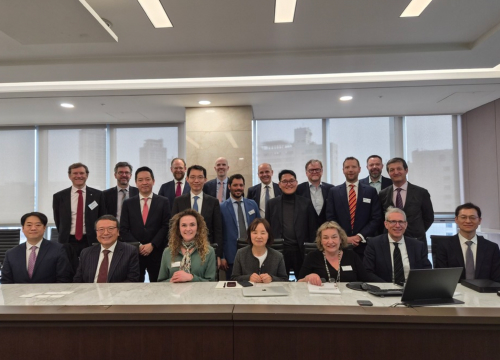
Joint Korea-Europe Forum Explores Role of “Technical Expertise” in Patent Litigation
On March 11, Lee International IP & Law hosted a joint forum titled “Technical Expertise in Patent Litigation” in collaboration with the Association Internationale pour la Protection de la Propriété Intellectuelle Korea (AIPPI Korea) and the European Patent Lawyers Association (EPLAW).
 Read More
New Members
-

Kyung-Eun KOOK
Patent Attorney
-

Jin-Sung GIL
Patent Attorney
-

Ji-Hyeon YOON
Patent Attorney